Saturday, October 12, 2019

The Positives of The Last Airbender

(Source: IMDB.com)
Growing up in the mid-2000s, no Nickelodeon show caught my attention in a post-Rugrats/Hey Arnold world more than Avatar: The Last Airbender. For those unaware, the latter series centered around Aang (the titular "Avatar") and his friends, as they traveled the world helping Aang master the art of "bending" the elements of water, earth, and fire. Along the way, a country opposing them known as The Fire Nation (lead by their leader, Fire Lord Ozai) is in constant pursuit of the young Avatar. Aang's basic goal throughout his journey is to master bending all remaining elements beside air, and defeat Fire Lord Ozai before the return of Sozin's Comet. Naturally with a series as massive as this, a film adaptation was inevitable; in 2010, such an adaptation was released... and it was absolutely horrendous. The characters were horribly miscast (aside from anti-hero Zuko and his uncle), and due to having to condense the show's first season into around two hours, the film suffered from a myriad of plot problems. Additionally, the work suffered due to unnecessary changes in adaptation, such as cutting iconic characters entirely. Characters such as Aang's previous life, Avatar Roku, Jet, and the Kyoshi Warriors are removed as a result of "streamlining" the overall story. However, despite the film being a massive dumpster fire, there are some positive aspects to it that deserve some recognition.

First and foremost, while the story's adherence to the source material is not the best, the world it plays out in surprisingly manages to remain faithful to its animated counterpart. Throughout the film, there are various references to locations in the world of Airbender, such as the library in the Earth Kingdom, the air temples, and the city of Ba Sing Se. Understandably, this was to start development on the film's world in preparation for the ill-fated sequels (which thankfully never came). Deleted scenes that remained in the novelization and comic adaptations further expanded upon the world; before Shyamalan decided to save it for the sequel, viewers would have been treated to live action versions of the Kyoshi Warriors and Jet. It was also rumored that Avatar Roku was also planned to make an appearance, before being relegated to a cameo in the form of a wooden statue. Speaking of the Avatar, the next positive in this film lies within Aang himself.

Despite casting a Caucasian actor for the role of Avatar Aang, Noah Ringer manages to pull off a fantastic portrayal of the character. He manages to remain faithful to the source material (being a fan of Airbender himself), while also making the role by giving us a portrayal that is more realistic in nature. While this film makes me cringe, I did enjoy this take on the character, as it made me feel like Aang leaped right off an animation cel. The same can be said for Dev Patel's portrayal of anti-hero Prince Zuko, despite lacking the physical resemblance to his animated counterpart. Patel and Ringer both manage to capture the essence of their respective characters, giving us a believable and faithful performance. Unfortunately, that cannot be said for the rest of the cast, as they lack the necessary elements of their characters. Sokka is more serious than comedic, Katara is bland and boring (lacking any sort of expression or emotion as well), and Iroh is just... there. Unfortunately, the animal characters are also given less screentime as well, serving only as background elements.

While the characters and story are not the best (save for Aang and Zuko), the film truly shines in its overall score and (to quote Sokka in The Ember Island Players) "the effects are decent". The score manages to perfectly capture the overall tone of the film, and the effects perfectly portray the elemental bending techniques. Viewers could believe a character was actually controlling the elements, and that there was an actual Sky Bison and Winged Lemur. The CGI is brilliantly integrated into the footage to create a greater visual appeal, with some examples including Aang going into the Avatar State, Appa's model, and the many waterbending sequences.

However, while this film does have a few positives, I would still not recommend watching this if you are wanting to get into Avatar: The Last Airbender. This movie is still an absolute mess, with poor editing, bland characters, a plot with multiple holes, and the omission of many fan-favorites from the source material. If you wish to give this franchise a shot, I would highly suggest you stay away from this; it will give you the wrong impression of the series. However, if you are curious, watch the cartoon first and then watch this only once to see how horrendous it actually is. Hopefully, the upcoming live action Netflix series does not make the same mistakes The Last Airbender did, and gives us the live action adaptation we deserve.

What did you think of both The Last Airbender and its animated source material? What are some bad movies you would like me to find the positives of? Feel free to discuss in the comments below, and also be sure to give a like and a follow for future Reviews and Retrospectives updates!

Sunday, October 6, 2019

Dragon Ball Z Retrospective Part 2: Majin Buu Arc (Heavy Spoilers)


(Image Source: DaizenshuuEX)

While I enjoyed watching the story of Dragon Ball Z up to the Cell arc, I did not have as much enjoyment of the Buu portion of the storyline. I feel that Cell's defeat at the hands of Gohan made a perfect ending for the series, with the now deceased Son Goku passing the torch to his son, and the world enjoying a much needed era of peace. The Cell arc completed the development of many members of the main cast; Gohan finally broke out of his pacifistic shell and saved the world like his father, Krillin finally found love in the form of Android 18, and Vegeta learned to stop being so narcissistic and self-centered. The series could have ended perfectly at this point and there would be no problem. However, due to editorial mandate, series creator Akira Toriyama was forced to continue the series even further with the Majin Buu story arc. As a result, the aforementioned arc feels both tacked-on and as if it is an "extended epilogue" to the series. Aside from introducing new characters, reconnecting with old ones seven years after Cell, and resurrecting Goku at the end (matter of fact Goku does little in this storyline, as it opts to focus on his sons, Gohan and Goten), this arc contributes very little to the franchise as a whole.

Matter of fact, Buu is not as interesting of an antagonist as Vegeta, Frieza, or Cell were. While the aforementioned three had dynamic personalities that slowly developed, Majin Buu seemed rushed and one-dimensional (you could tell Toriyama was wanting to be done with the series at this point). The character seems infantile, acting only like a destructive, spoiled child as opposed to the calm and interesting villains that came before him. However, I will give Buu something positive, he is somewhat more sympathetic and adorable (especially his first form).

He is also a more formidable foe to the cast, going so far as to literally destroy Earth itself. Another positive to this arc that I will add is the further development of my favorite character, Son Gohan (even going so far as giving him a romantic interest known as Videl). While during the seven year timeskip between Cell and Buu, his power was weakened drastically, he manages to hold his own during the battles he faces in this storyline. However, he is once again quickly knocked to the ground in favor of his father, since he's the "main character". I feel after this, Gohan is drastically underutilized for the remainder of the franchise, being demoted to a small supporting role rather than the protagonist he was hyped up to be in the first half of the series.

This arc was also the introduction to the most useless (and ugliest) of transformations, Super Saiyan 3. The form serves only to be flashy during action sequences and is utilized poorly in Z, with Goku losing a significant amount of time and power while in that state (it essentially becomes the new "Yamcha"). SS3 feels once again like another instance of Toriyama saying "I need to get this series over with as soon as possible and appease my editor".

The Majin Buu arc of Dragon Ball Z is not a bad way to end the series by any means, but the overall execution is rushed, fan favorite characters are tossed aside, and the titular villain of the storyline is severely lacking in development (being essentially the equivalent of a spoiled man-child, rather than an intimidating entity like his predecessors). Buu was an absolutely unnecessary and tacked-on addition to the series, serving as one final villain in Toriyama's extended epilogue to Dragon Ball.

What did you think of the Buu arc? Feel free to discuss in the comments below, and be sure to follow for future updates on the site! Next time, we will be looking at my favorite installment in the series, by going back and taking a look at Goku's childhood in the original Dragon Ball.


Turtles (1990) vs. Turtles (2014)


(Image Source: Wikipedia.org)

In regard to my list of favorite comic book films, there is none I hold on a higher pedestal than Sam Raimi's original Spider-Man. However, a close second is the first live-action adaptation of Mirage Studios' Teenage Mutant Ninja Turtles. I admire the film for how it stays faithful to the source material (the comics as opposed to the popular 1987 cartoon), and shows a casual audience an approximation of the original turtles' personalities. While it is much more faithful to the original comics, it also sprinkles in some elements from the cartoon, such as the turtles' colored bandanas and April O' Neil being a television reporter. Additionally, it shows some amazing effect work courtesy of the Jim Henson Creature Shop. Matter of fact, this project was one of the last Henson was involved in before he passed away in May of 1990 (the film's home media releases are actually dedicated to him, such as the DVD).

Since this film adheres more to the comics than the cartoon in terms of plot, characters such as Krang, Bebop, and Rocksteady are thankfully omitted. The tone is also more realistic and grounded in reality, similar to the later Christopher Nolan Batman films. Therefore, one should not expect much of the science fiction elements found in its' animated counterpart. However, the traditional origins of the turtles are kept, and Master Splinter's origin reverts to being the pet of Hamato Yoshi, as opposed to being Yoshi himself (the latter of which I was never a fan of in the 1987 and 2012 versions). Casey Jones and April O' Neil also play roles more similar to the comics, such as the former being a more prominent character than in the animated series (and actually being unmasked). The realistic tone that is carried over from the comics allows for a product that is more believable, and allows for a greater sense of immersion. However, since it takes on a more realistic and darker tone, I would advise showing this version of the turtles to small children since it contains more violence and instances of profanity. The stakes for the turtles are much higher, and the antagonist, Oroku Saki/Shredder is much more intimidating than the bumbling idiot in the cartoon.

Shredder, the turtles, and Splinter feel like they are ripped directly from the comics in terms of appearances, personality, origin, and motivations. Matter of fact, the former's outfit is a 1:1 recreation of the character's appearance from the first issue of the series. Speaking of which, many moments in the plot are ripped directly from the source material as well, with the final confrontation being almost a "shot for shot" adaptation of the battle with Shredder from issue one (aside from the battle's end). We would not see another faithful recreation after this for another thirteen years, when the 2003 4Kids adaptation was released (a version arguably more faithful than this film). If you are looking for a "definitive" adaptation that perfectly captures the essence of Ninja Turtles, then I would highly recommend this one. However, if you are looking for a version that captures more of the essence of the cartoon (albeit poorly), then we have something for you as well; the 2014 Michael Bay reboot...

While the aforementioned film was more grounded in reality, and adhered to the gritty tone of the original comics, this version is that version's near polar opposite. Instead of following the original comics, it chooses to follow the original cartoon. While the 1990 film used impressive practical effects that made the turtles feel believable, the 2014 reboot uses awkward CGI that made the heroes in a half-shell look like Shrek clones on steroids (and made Shredder look as edgy and extreme as possible). I suppose I shouldn't be surprised, considering the man behind this is Michael "make everything macho and over the top" Bay of Transformers fame.

This version poorly captures the essence of the franchise, and simply turns it into 2+ hours of explosions, excessive amounts of computer graphics (especially where there did not need to be CGI), and a bland, miscast April O' Neil (portrayed by Bay's "go-to gal", Megan Fox). Viewers can really tell that Fox was doing this for a paycheck and nothing more, she acts with little personality to the point of it being sleep-inducing. Unfortunately, she also overshadows the titular characters and has a significantly higher amount of screen-time than they do.

Additionally, the origins of the turtles and Splinter are drastically changed as well, with any connection to Hamato Yoshi being completely omitted. However, while this film is a poor adaptation of the source material, there is one aspect they did get right; the individual characteristics of the turtles. While they look like bulked-up Shrek clones, they still act like they are supposed to. Their family dynamic also remains faithful to the source material, acting like brothers instead of four soldiers.

Overall, if you want an experience that is closer to the comics (and much more enjoyable), go for the 1990 film. However if you are looking for excessive adrenaline rushes, macho manliness, bland characters, extreme action sequences, and a product that is basically Ninja Turtles in name only, then go for the 2014 film by Michael Bay. The latter was an absolute chore to watch in the three moments I attempted to do so, and I do not see myself viewing it again (thank goodness I only rented it instead of outright purchasing it for this review). I hope these turtles fade into obscurity in favor of a future experience that is more like the original film, with believable effects, dynamic characters, and a world adhering more closely to either the original or rebooted comics. Perhaps they could make it a period piece by setting it in the 1980s, and make it closer in tone to Kevin Eastman and Peter Laird's original vision. I would love to see the turtles having all red bandanas for the first time outside of the comics, and the first live action appearances of the Utroms.

What do you think of these two versions of the turtles? What is your favorite Teenage Mutant Ninja Turtles adaptation? Feel free to discuss in the comments below; also feel free to like and follow this page for future updates! 

Saturday, September 7, 2019

Top 5 Unpopular Opinions

The greatest aspect of an opinion is that everybody is entitled to their own; while many may have a similar opinion on one thing, there may be some that think differently. For example, some may think it is great to have more Dragon Ball content on the air with the advent of Super and the new movies, others may think the franchise has long overstayed its welcome. Another example is in regard to Disney's direct to video sequels; some may think a majority of them are horrendous trash, others may think there are quite a few hidden gems (I am in the latter camp, I loved the Lilo and Stitch, Lion King, and Aladdin sequels). I am just as guilty when it comes to unpopular opinions, matter of fact, here are five examples of my own (along with an honorable mention):
  • One Piece is an anime that has long overstayed its welcome 
    • Before explaining this unpopular opinion, let me give you all a disclaimer; One Piece is by no means a bad anime at all. However, I think an anime (or any ongoing series for that matter) that has gone on for well over 900 episodes is a tad excessive, and creates a problem in terms of pacing. I understand this series is about a band of pirates traveling the globe in search of the titular treasure, but we do not need to see every second of their adventure. If its creator were to streamline the story to the most important moments of the Straw Hat Pirates' adventure, then this series would be much more palatable and easier to get into. I have attempted to get into this series multiple times, but failed each time because the massive episode count and horrendous pacing makes it a chore to watch completely. This series has been ongoing for over twenty years, I believe it is well beyond time for the Straw Hats to reach their final destination and end this series. The longer it goes, the more difficult it will be for a newcomer to get into.
  • The Wii U is a genuinely great console
    • This one is pretty self-explanatory; Nintendo's Wii U console is one that is gravely underrated. It combines the best aspects of home console and portable gaming, it is Nintendo's first High-Definition console, and its Virtual Console represents all of their previous systems with the exception of the Gamecube. Unfortunately, it was unable to realize its true potential due to Nintendo's poor marketing of the product. They marketed the console as an upgrade to the original Wii, rather than its successor like it actually was. Additionally, third-party developers found it difficult to create games for it. As a result, the Wii U was a commercial failure to the company, similar to their Virtual Boy, and was quickly phased out in favor of the Nintendo Switch. Personally, I loved playing games on the Wii U, and was disappointed to see its quick demise. Matter of fact, it is one of my favorite consoles from Nintendo, next to the Gamecube and Switch. While the third-party support was severely lacking, its range of first-party titles was phenomenal! Games such as Hyrule Warriors, Super Smash Bros., and Nintendo Land were great experiences, and their remakes of Zelda games such as Wind Waker and Twilight Princess were massive improvements over the original. I never beat the original versions of the latter two games, but I quickly beat their Wii U remakes. If you ever get the chance to play this console, I can assure you it will be an unforgettable experience. However, there are some glaring flaws, such as having to be in the same room if you wish to stream the game to the GamePad controller. If you wanted to play purely on said controller, you had to be less than thirty feet away from the main unit or else the signal would be lost. 
  • X-Men Origins: Wolverine is a solid film
    • Ironically, I believe the X-Men films that are considered "bad" in the eyes of the general consumer to be fairly solid (with the exception of the recent Dark Phoenix); X-Men Origins: Wolverine is no exception. It presents a solid interpretation of Wolverine's origin story, and serves as an excellent lead-in to 2000's X-Men film. The pacing is also solid, with no events being too quick or overstaying their welcome, in addition to having a good balance of action, drama, and comedy. However, I do agree with one criticism of the work, Origins' version of Deadpool. I am glad this version of the character was quickly retconned into the snarky, crude, fourth-wall destroyer the public is familiar with. Ryan Reynolds' initial version of Deadpool was the polar opposite and a far cry from his counterpart in the comics, to the point of his mouth being sewn shut; the character is supposed to be a chatterbox, why make him mute? That aside, it was interesting to see Wolverine's beginnings and the cause of his memory loss in his later appearances. If you catch this film out in the wild, I would highly suggest giving it a watch.
  • Disney's live action remakes are not as bad as people think
    • Disney's recent trend of live action remakes based on their animated films has been a polarizing subject, with a general consensus finding them mediocre at best to horrendous at worst. Personally, with the exception of Maleficent, I found these remakes to be very enjoyable, gladly defending them whenever possible. I grew up watching the original animated versions of these films, and I am always excited to see new interpretations of these stories. While some may see these remakes as "cheap, soulless cash-grabs", I find these as opportunities for Disney to bring back concepts that were cut from the original films (along with elements from their stage counterparts in some cases), and integrate them with the stories we all know and love. Additionally, it allows the company to address the flaws found in the originals and expand upon them, such as how Belle and Beast's backstories are addressed. However, I will admit these new versions have their share of flaws as well (if you would like to see my opinions on Beauty and the Beast, Aladdin and The Lion King, click on their respective italicized names, as I do not plan to re-address them here). In the case of Dumbo, we are not only re-acquainted with the original story, but shown what happens afterward. Perhaps it is time to give these remakes another shot, seeing them for their own merits instead of in the shadows of their source material; you might find them as "diamonds in the rough", to quote Aladdin.
  • Honorable Mention: Sonic 06 is not the worst game ever
    • In many lists of "worst video games ever made", the 2006 reboot of Sonic The Hedgehog is frequently mentioned. While it is a barely playable mess with a plethora of frustrating glitches, there is some merit to the game. It presents an experimental scenario of placing Sonic and his cast in a realistic setting, along with a new design for series antagonist, Dr. Eggman (a design I think would work so much better in the upcoming live-action film). The game also introduced a new character to the franchise (Silver the Hedgehog), along with solidifying Sonic Rush's Blaze the Cat's place among the franchise's cast (despite retconning her origin). I am probably one of the few that finds Sonic 06 enjoyable; matter of fact, it was the game that made me want to get an XBOX 360 in middle school. It is by no means a perfect game, nor is it great, but it is a solid title in the XBOX 360's library despite its flaws. It is not the worst game in history either (that goes to the Atari 2600 game based on E.T. the Extra-Terrestrial), and is one that definitely deserves a second look. However, in regard to the Wii U title, Sonic Boom: Rise of Lyric, that mess of a game deserves to burn in the nearest dumpster fire.
  • The Little Mermaid's Ariel is a selfish protagonist
    • While I understand this may cause me to lose a few readers, I will preface this by saying that I do not think The Little Mermaid is a bad film by any means whatsoever. It has amazing animation (being one of Disney's last to use traditional cel-animation before switching to the CAPS system), a great score from Alan Menken and the late Howard Ashman, and great characters.... aside from the aforementioned protagonist. In terms of Disney heroes and heroines, Ariel is probably one of the most naive and selfish in the studio's history. Her actions and motivation not only endanger herself, but her supporting cast as well. Her exploring the sunken ship at the beginning of the film almost caused her and Flounder to become shark food, and her desire to be with a human prince puts her entire kingdom at risk from Ursula as well. Her father had every right to be protective, since I have a feeling he knew all of this would happen. She is a protagonist that really needed to learn that all of her actions have consequences, both good and bad; throughout the course of the film, she thought little of how her actions would affect others, thinking only for herself. I do admit I am being a bit harsh on the character, but this is one major flaw that I hope is addressed in the upcoming remake. Ariel is a character that desperately needed to gain a sense of humility and consideration for others. 
What are some of your unpopular opinions? Feel free to discuss them in the comments below and on social media, and be sure to give a follow for future Reviews and Retrospectives posts. 

Thursday, August 29, 2019

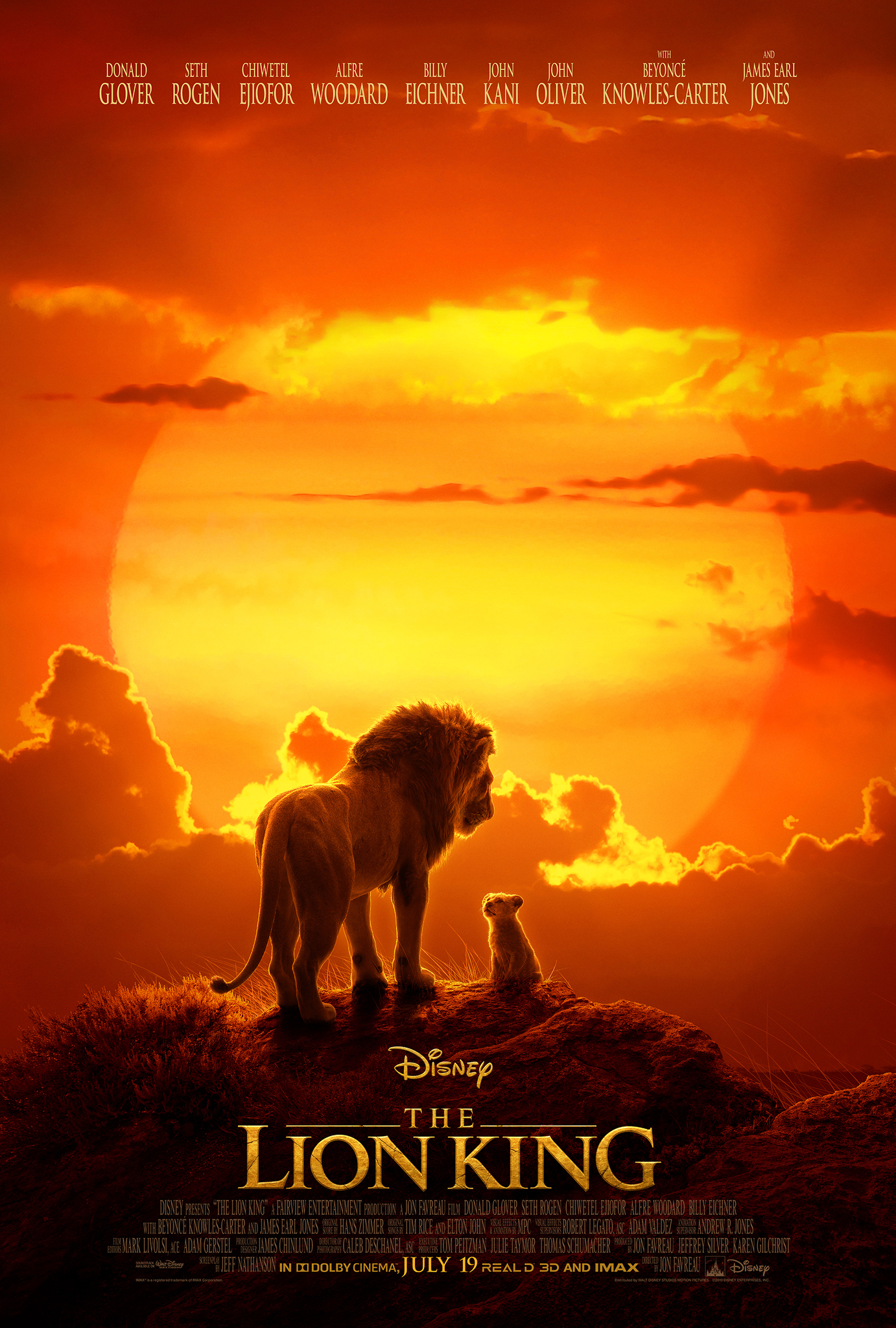
The Lion King (2019)


(Source: Amazon.com)
I will admit, this is one of Disney's remakes I waited for with much anticipation, and one of two I can definitely say I "loved" rather than simply "liked" (or in the case of Maleficent, did not care for at all). The original animated film this is based on is arguably tied with Aladdin and Beauty and the Beast for my title of "favorite Disney film", and this version can be said similarly for Disney's recent live action remakes. I grew up watching the animated Lion King across various forms of home media, going from the VHS, to the DVD, to my current Blu-Ray copy; matter of fact, I have seen the film so many times I know the story beats by heart along with its production history. Understandably, when I heard it was going to be another one of Disney's remakes, I was more excited for this than I was for Aladdin.

When I saw it fairly recently, I left the theater with a massive smile on my face seeing one of my favorite films with a new coat of paint; it remained faithful to the original (down to casting James Earl Jones as Mufasa once again), the songs were just as I remembered them and mixed elements of their stage versions, and managed to expand upon the story of the original in certain places. However, while I was more than satisfied with the finished product (and the burger I ate while watching it), I do have some flaws I would like to address.

The first piece of criticism that needs to be addressed was James Earl Jones' new interpretation of Mufasa. While initially, I was excited to see the original voice actor returning (considering he is one of my favorite actors, and Mufasa is one of my favorite characters), I was unfortunately disappointed seeing it in action. In the original film, Mufasa's voice had this booming power and regal tone to it, showing Jones was putting a massive amount of passion in the character. In this version, his delivery was flat, emotionless, and felt quite cheap. Unfortunately, that kills the mood in certain iconic scenes carried over from the source material, and sadly destroys their impact. Scenes such as him lecturing a young Simba under a starry sky, and the latter seeing his father's ghost later in the film lose the power and emotion they once had because of that flatline delivery. One could obviously see that Jones was not reprising his role for the fond memory of doing the original, but simply for a paycheck. A similar criticism can be given to Mufasa's brother, Scar; particularly regarding the new version of the villain song, Be Prepared.

I will preface this criticism saying that I liked the new Be Prepared; matter of fact, it sent chills down my spine moreso than the original and stage versions. The new version increases the intensity of the song, increasing its impact and the intimidating nature of the antagonist. However, like Doomsday's appearance in Batman v Superman, it also felt like it was tacked on to appease the fans since it was initially planned to be cut from the remake. This is definitely shown through the song's length and the lyrics, since over half of it is simply the phrase "be prepared" repeated multiple times. The song itself is also significantly truncated in comparison to previous versions, clocking in at slightly over two minutes as opposed to the three minute original. That and the hacked-together nature of the song disappointed me, because Be Prepared is my favorite song from the original film, and the one I was looking forward to seeing most. However, I love how it left me speechless as the number ending, simply mouthing "whoa" and attempting to process what I saw moments before. Moving past the negative aspects of the film, there are some massive positives that need to be recognized; for starters, those regarding the new Timon and Pumbaa.

Billy Eichner and Seth Rogen managed to gracefully uphold the legacy left by their predecessors, Nathan Lane and Ernie Sabella. Matter of fact, there were times where the two managed to sound almost identically to the originals. Additionally, their versions of Hakuna Matata and the "live bait" scene kept me laughing. While the comedic aspect of the remake has been drastically reduced, I am  glad that Timon and Pumbaa still delivered on the laughs, and stole the show just as they did in the source material. I am going to give a slight spoiler, but my favorite scene with these two was when they were singing The Lion Sleeps Tonight, and their neighbors were looking at them like they were saying "oh god, not those guys again." Their expressions alone caused quite a few laughs from the audience.

In regard to the aforementioned reduction in comedy, while this take is substantially darker, it also means the emotional impact is increased. While I could emotionally connect with the characters in the original, there were moments where I was nearly to the point of shedding tears in certain moments in the remake. A prominent example of this was during the infamous stampede sequence; I tried to hold back tears as Mufasa put his own life on the line to Simba, but when Scar threw him off the cliff, I simply lost it. I do not remember the last time a scene in a film had that much of an emotional impact on me, but good job Lion King for pushing me to that point. I still cannot listen to the stampede's instrumental without having flashbacks of that scene, so thank you for that.

Overall, this is one of Disney's remakes I would highly recommend seeing; it is faithful to the original while also giving the viewer something new (along with references to the stage musical), it retains all songs and their charm from the original (something Aladdin and Beauty and the Beast did not), and is also beautifully animated. However, if you are going in expecting James Earl Jones to give another stellar performance as Mufasa or something as comedic as the original, then you will be somewhat disappointed. Myself, I am definitely looking forward to seeing it again when it is released on Amazon Prime Video; I absolutely loved it despite its flaws.

What did you think of the film? Feel free to discuss your thoughts in the comments below, and also please like and follow for future Reviews and Retrospectives posts.

Sunday, July 14, 2019

Top 5 Disney Songs from the Stage Musicals

For a bit of context, whenever Disney makes a stage musical based on one of their films, they will usually include all or at least two of the following:
  • All or most of the songs from the source material
  • Songs written for the original film but cut (such as Human Again in Beauty and the Beast, and Proud of Your Boy in Aladdin)
  • Songs written exclusively for the stage production
I have covered the first two in previous reviews, so it is fitting that I should cover some of the songs written exclusively for the stage versions. I will be discussing when this song takes place in the show (so there will definitely be spoilers), the impact it has on the overall story, and my overall thoughts on the number. As was the case with the previous two reviews of this nature, I will only be doing one song per production, so each show gets their chance in the spotlight (pun intended). I will also be including links to the songs for you to listen to, so you can develop your opinions on which ones you like as well. 

#5: I Need to Know, Tarzan


(Source: TLMBroadway193)

Plotwise, this song takes place during the scene where the young Tarzan is trying to determine who (or what) he is, after a fallout with the gorilla tribe's leader, Kerchak. This song could serve as the customary "I want" number in a musical, something the original 1999 film lacked. Tarzan is trying to determine where he belongs and his place in the world, unaware of his humanity at this point in the story. He is later comforted by his adoptive gorilla mother, Kala, whom essentially informs him that even though they look different, they are indeed one in the same. I like how this song is used to develop Tarzan as a character, and sets up his development for the rest of the production (considering it directly precedes the iconic Son of Man from the original movie).

#4: Esmeralda, The Hunchback of Notre Dame


(Source: Adam Ostrowski)

At this point in the production, we have learned of the desires of both Quasimodo and his adoptive father, Archdeacon Frollo. Essentially, they have the same desire, "the gypsy known as Esmeralda". Matter of fact, Frollo's desire for Esmeralda is so insane, he decides to burn down a majority of Paris simply to locate her; it essentially sounds like a stalker horror gone completely wrong. It serves as a turning point for the majority of the main characters; Phoebus turns on Frollo, Esmeralda decides to stand up for herself and the gypsies, we begin to see Quasimodo rebelling against his master, and Frollo (of course) goes insane. The song serves as a powerful finale for the show's first act, leaving the production on a powerful (and somewhat bleak) cliffhanger. Like the song preceding it (Hellfire) and The Lion King's Be Prepared (coincidentally, Frollo's actor played Scar in The Lion King), this is definitely one song that will send massive chills down your spine. 

#3: He Lives in You, The Lion King


(Source: TheSonicMaster123)

After reuniting with Nala and being persuaded to return to the Pride Lands to reclaim his throne, Simba is left confused on what he should do. He still believes he is the one who killed Mufasa, which makes him reluctant to return home. Essentially, this song takes place during the scene where Simba sees his father's ghost (one of my favorite Disney moments), and gives a powerful message; even though some are gone physically, they still live on in all of us. The message and Swahili vocals alone make this song one of my favorites, in addition to it taking place during my favorite part of The Lion King. Matter of fact, this song is so good, it serves as the opening for The Lion King II as an analogue to Circle of Life. It is one that reinvigorates and is a powerful showstopper before the final confrontation with Scar.

#2: A Million Miles Away, Aladdin


(Source: DisneyMusicVEVO)

After Aladdin and Jasmine meet, the audience learns of their desire to escape their current situations; Al wants to break away from being a street rat, and Jasmine does not want to be in an arranged marriage she has no consent to. They both decide to run away from Agrabah and start life anew, having only each other's company. A Million Miles Away discusses their plan and what they hope to expect from it, while also being a beautiful romantic ballad for the two. Matter of fact, this song also sets up their later meeting and A Whole New World, as hinted by Aladdin's short reprise at the beginning of the aforementioned song. I wish this song (or some equivalent to it) was used in the 2019 remake of Aladdin, as it would have further built their relationship. I love the song because it furthers the characters' development, it has a beautiful melody, and it hints at their relationship later in the show. Not having a duet like this in the remake was definitely a missed opportunity for the production staff.

#1: If I Can't Love Her, Beauty and the Beast


(Source: disneysoundtrack89)

Of course, my number one pick on this list is from my favorite stage musical, Beauty and the Beast; specifically, the finale of the show's first act. Taking place after Beast scares Belle out of the castle, the former begins to lament on possibly losing his only chance to break his curse. If he does not change his ways soon, "he would be doomed to remain a beast for all time". The song serves as the beginning of Beast's character development, along with being somewhat of an apology to those he's affected. It makes you want to cheer for the success of this character, and see him through his wish to regain his lost humanity. Like A Million Miles Away in Aladdin, If I Can't Love Her should have also been in its respective live action remake. Having this song and Evermore would have made perfect bookends to Beast's character development. (On a side note, I am glad that production I saw at Shawnee Mission Theater in the Park thought similarly. Instead of performing  If I Can't Love Her's reprise like usual, they performed Evermore instead. While I understand they were paying tribute to the recently released remake by doing so, it was definitely a smart move and gave Beast another well-deserved ballad.)

What are some of your favorite songs from Disney's stage musicals? What are some of your favorite musical numbers in general? Feel free to leave a comment below and discuss! Additionally, feel free to give me a follow for future updates on the blog. 

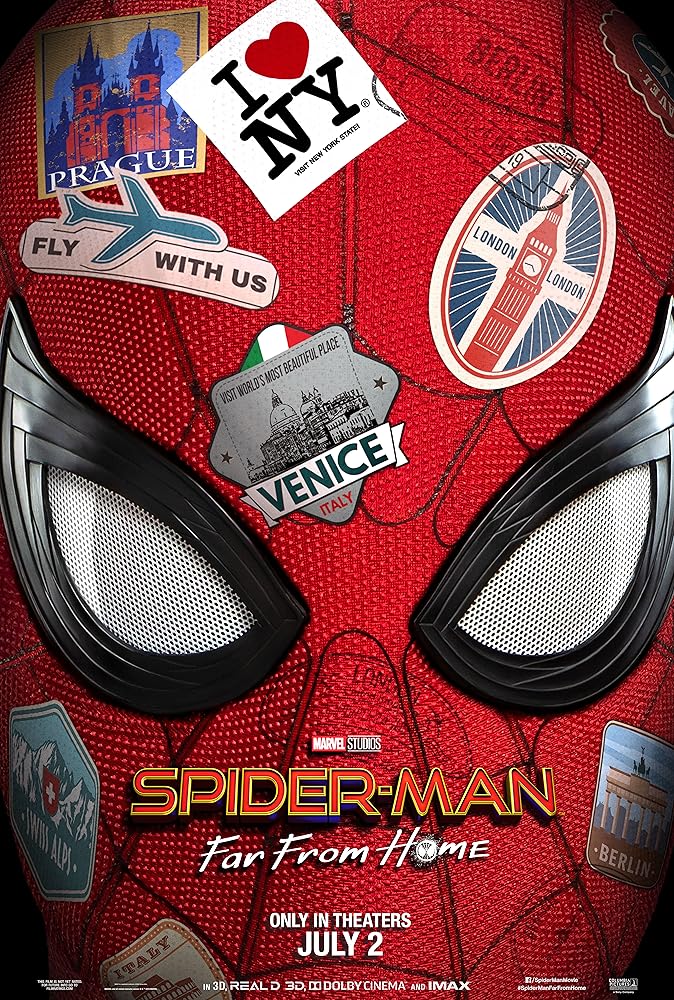
Spider-Man Far From Home (Minor Spoilers)

(Image Source: iMDb)

While I am elated that Spider-Man is in the Marvel Cinematic Universe, I feel Sony and Marvel's handling of this incarnation of the character has been a mixed bag. Don't get me wrong, I think Tom Holland's take on the character is pretty solid with plenty of room to grow. I understand this version of Peter Parker is relatively new to the hero business, and still has much to learn about being a superhero. However, as of now, I rank this take on the character between his predecessors, Tobey Maguire and Andrew Garfield; he nails both sides of the character, the quirkiness of Peter Parker and the witty heroics of Spider-Man. Unfortunately, Marvel and Sony have been touting him more as Iron Man Jr., rather than a hero of his own. This was my biggest complaint with Spider-Man Homecoming, and it is definitely one of the bigger faults of Spider-Man: Far From Home. It seems Marvel definitely wants to make him one of the new faces of this franchise, but if they want to do so effectively, they need to let Spider-Man stand on his own and not in the constant shadow of Tony Stark. I think Jon Favreau's character (Happy Hogan) says it best, he's not the next Iron Man and he is never going to be Iron Man. With that little rant out of the way, how does Far From Home hold up as an installment of the MCU and as a Spider-Man solo film? Honestly, while it was solid in both regards, I felt it was simply another "filler" episode like Ant Man and Guardians of the Galaxy Vol. 2.
Acting as an epilogue to the MCU's Infinity Saga, Far From Home takes place after the events of Avengers: Endgame. The film does well in setting up a Post-Avengers world through the perspective of Peter Parker, and giving us a taste of the world in Phase 4 (and possibly beyond). The basic premise surrounds Peter and his classmates taking a class trip to Europe; unfortunately, the vacation is hijacked by SHIELD commander, Nick Fury, and a mysterious person known as Quentin Beck. Similar to how Homecoming paid homage to John Hughes' "high school comedy" films of the 1980s, Far From Home seems to pay tribute to the National Lampoon Vacation series, most notably National Lampoon's European Vacation. The viewer joins Peter and his classmates as they travel across the European countryside, visiting notable locations such as Venice, Prague, and London. It is interesting to see Spider-Man in a location outside of his usual New York, and offers something new to longtime fans of the character. While I enjoyed the change in scenery, it adds very little to the overall production; the filmmakers could have kept it in New York and the plot would have remained mostly the same. They still would have kept Peter feeling lost after Endgame, his budding romance with Zendaya's version of MJ, and the conflict surrounding Nick Fury and Quentin Beck's overall mission. Speaking of Quentin Beck, his version of Mysterio was an amazing visual spectacle, but was unfortunately lacking as a character. While I understand Gyllenhal was attempting to portray him as supposedly the opposite of his comic book counterpart, it unfortunately comes off as pretentious. However, I suppose that simply adds another layer to Mysterio, adding to his overall "illusion". I will say I liked the interactions between Parker and Beck, with the latter acting as another mentor to him in his time of need.
In regard to Samuel L. Jackson's Nick Fury, he was once again at the top of his game and was easily my favorite character in the film. (Marvel, can we please get a Nick Fury movie? That would be amazing!) I also enjoyed some of the supporting cast, such as Zendaya's MJ, but I felt there was one subplot involving them that Marvel was being a bit pushy with. Thankfully, that particular one ends along with this film.
Overall, Far From Home is solid as both an installment in the MCU and as a Spider-Man film; however I feel it was a lacking and unnecessary one. It felt more like a filler episode than a major chapter, aside from the mid-credits scene which is one of the few noteworthy parts of this film, and sets up the character's overall future. If you are looking to marathon the MCU in its entirety, this one can be considered optional since it does not contribute much to the overall narrative. The action scenes were pretty solid, I will give them that. It is worth watching out of curiosity, and seeing where the franchise is going after Endgame. Hopefully, the inevitable Spider-Man 3 fixes many of these missteps and gives us a fitting conclusion to Peter's high school years. What did you think of this movie? Feel free to discuss in the comments below, and be sure to follow for more updates from Reviews and Retrospectives.